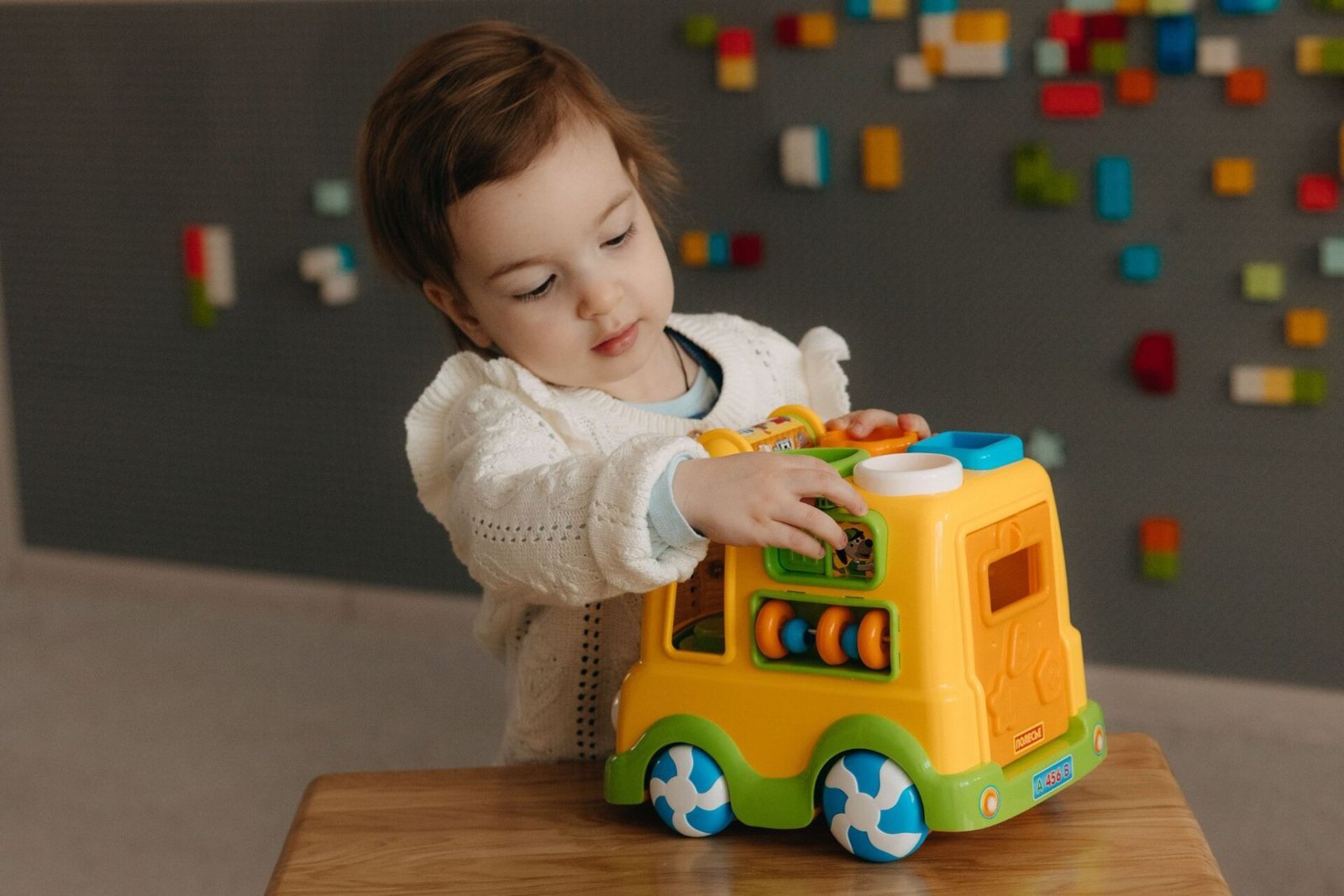
Rainy days, cold weather, or hot summer afternoons don’t have to slow down your child’s learning. In fact, some of the most valuable developmental experiences happen indoors through creative play, hands-on activities, and everyday exploration.
For infants, toddlers, and preschoolers, indoor learning activities build important skills that support school readiness while making learning fun. Whether you’re looking for ideas to try at home or wondering what to expect from a quality child care center, here are some of the best indoor activities that help children grow.
Why Indoor Learning Matters
Young children learn through play, movement, and interaction. Every puzzle they solve, story they hear, and block they stack helps strengthen important developmental skills.
Indoor learning activities encourage:
- Language development
- Fine and gross motor skills
- Problem-solving
- Creativity
- Social skills
- Emotional development
- Independence
The best activities don’t feel like lessons. They feel like play, which is exactly how young children learn best.
To learn more about why these early experiences are so valuable, read our blog on The Importance of Early Childhood Education Every Laurel, MD, Parent Should Know.
1. Reading Together
Reading is one of the simplest and most effective ways to support your child’s development.
As you read, children build:
- Vocabulary
- Listening skills
- Memory
- Imagination
- Early literacy
Ask questions throughout the story to encourage conversation.
For example:
- What do you think happens next?
- Can you find the red bird?
- How is the character feeling?
Even just 15 to 20 minutes of reading each day can make a lasting difference.
2. Building with Blocks
Blocks may seem like simple toys, but they teach a wide variety of skills.
Children practice:
- Problem-solving
- Spatial awareness
- Creativity
- Balance
- Hand-eye coordination
- Teamwork when building together
Encourage your child to build towers, bridges, houses, or even recreate places they know.
3. Arts and Crafts
Creative activities allow children to express themselves while strengthening fine motor skills.
Simple supplies like:
- Crayons
- Markers
- Construction paper
- Glue sticks
- Child-safe scissors
- Stickers
- Paint
can become hours of educational fun.
Art also encourages imagination, confidence, and decision-making as children create something uniquely their own.
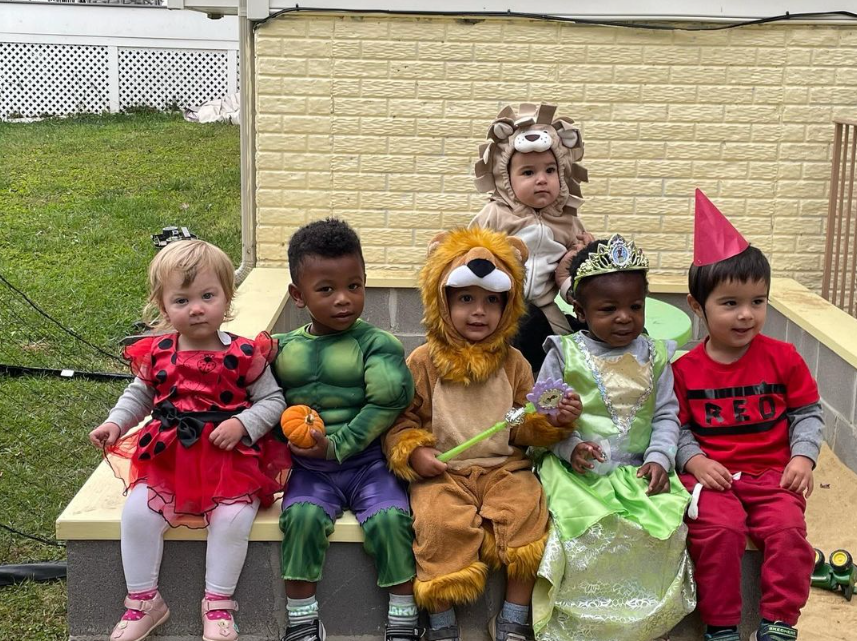
4. Pretend Play
Imaginative play helps children understand the world around them.
Children might pretend to be:
- Doctors
- Teachers
- Firefighters
- Grocery store workers
- Parents
- Veterinarians
Pretend play develops:
- Communication
- Empathy
- Creativity
- Social skills
- Problem-solving
It’s also a great opportunity for siblings or classmates to work together.
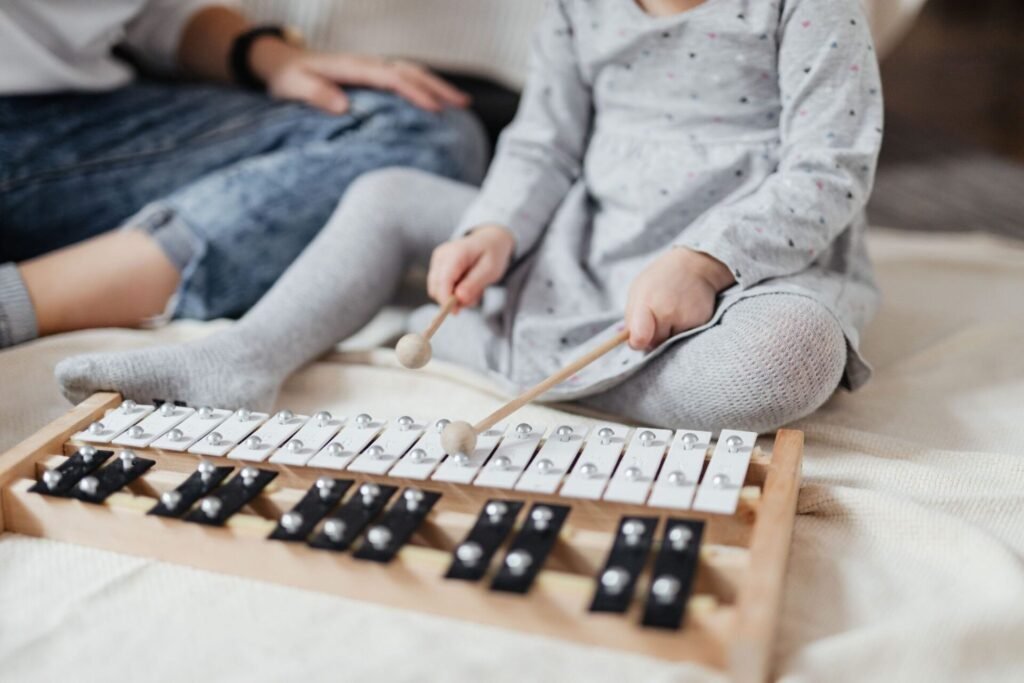
5. Music and Movement
Indoor dance parties are more than just fun.
Music helps children develop:
- Rhythm
- Coordination
- Balance
- Listening skills
- Self-expression
Try singing songs with motions, dancing together, or using simple instruments like shakers or tambourines.
Our blog The Benefits of Music and Movement Activities for Kids shares even more ways music supports early childhood development.
6. Simple Science Activities
Young children are naturally curious.
Simple science activities help them ask questions and make discoveries.
Ideas include:
- Mixing colors
- Floating and sinking experiments
- Growing seeds
- Exploring magnets
- Observing ice melt
These activities encourage curiosity while introducing basic science concepts in age-appropriate ways.
7. Puzzles and Matching Games
Puzzles teach persistence while improving thinking skills.
Children develop:
- Concentration
- Shape recognition
- Memory
- Problem-solving
- Fine motor coordination
Choose puzzles that match your child’s age and gradually increase the difficulty as they grow.
8. Sensory Play
Sensory activities allow children to explore different textures, sounds, and materials.
Popular ideas include:
- Water play
- Playdough
- Kinetic sand
- Rice bins
- Cotton balls
- Foam blocks
Sensory play supports brain development while encouraging creativity and exploration.
Always supervise younger children during sensory activities.
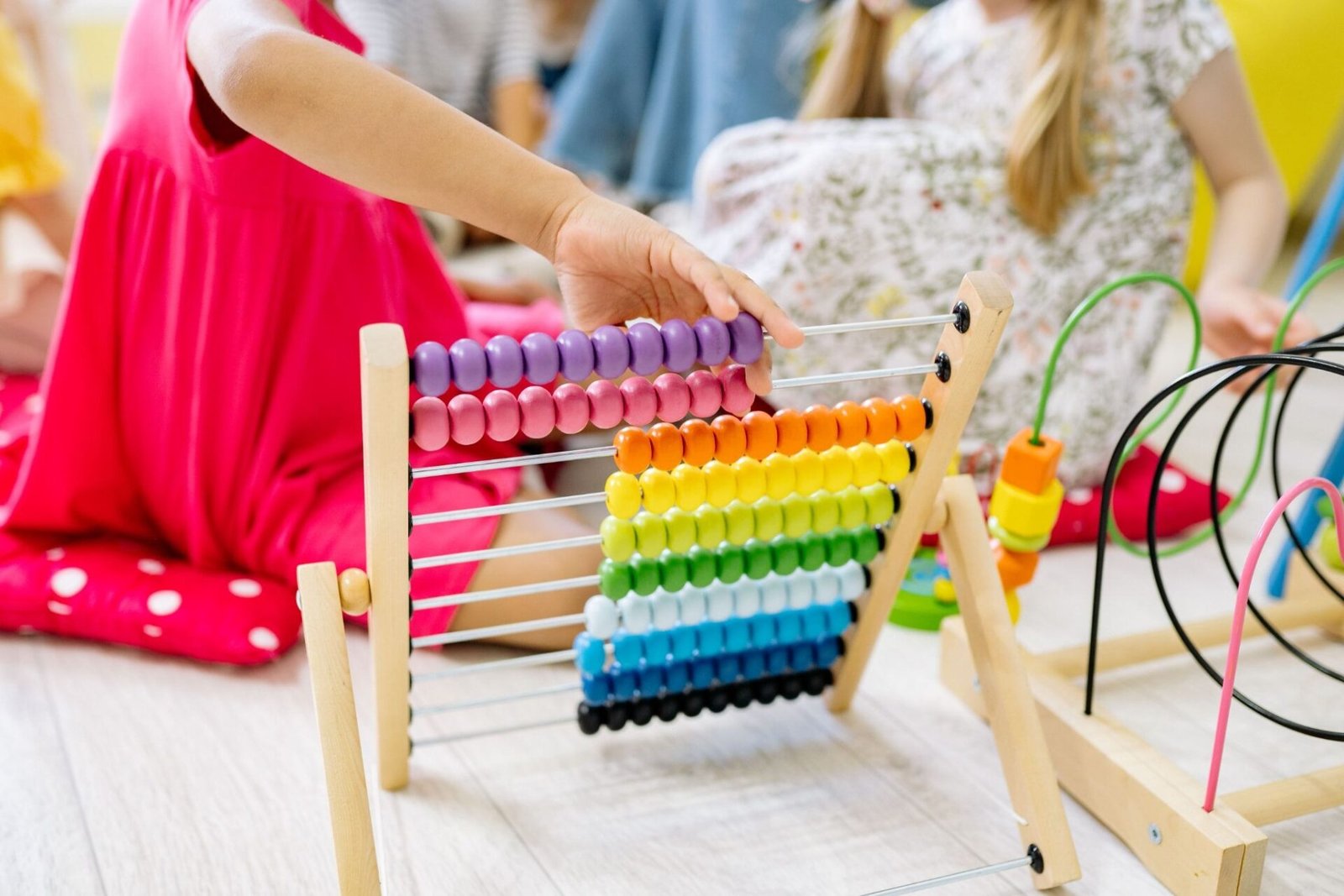
9. Sorting and Counting Games
Math skills begin long before kindergarten.
Simple activities like sorting objects by:
- Color
- Shape
- Size
- Number
help children recognize patterns and develop early math concepts.
You can even use everyday household items like buttons, toy animals, or blocks.
10. Everyday Learning Through Routine
Some of the best learning opportunities happen during everyday activities.
Children can help:
- Put away toys
- Set the table
- Match socks
- Water plants
- Organize books
These simple tasks teach responsibility, independence, and confidence.
Our article Fostering Independence in Young Children: A Guide for Parents explains how small responsibilities help children grow into confident learners.
Learning Through Social Interaction
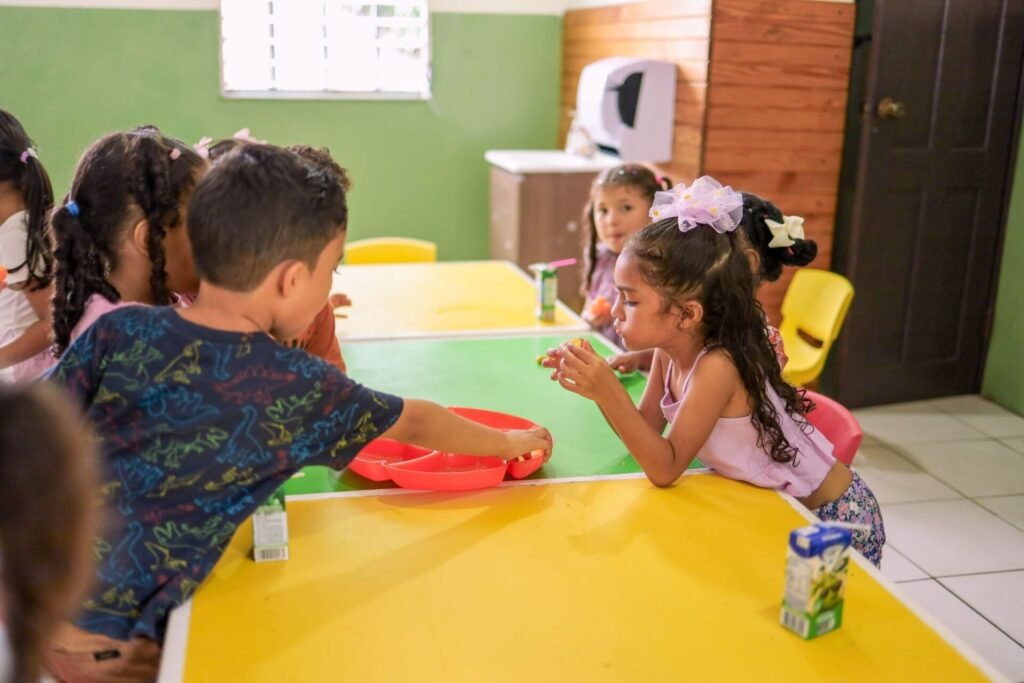
If your child attends daycare, many indoor activities become opportunities to learn alongside other children.
Working together helps children practice:
- Sharing
- Taking turns
- Following directions
- Solving problems together
- Communicating effectively
These experiences support both academic and social development.
Learn more in The Importance of Social Skills for Children.
Indoor Learning at Busy Minds Daycare
At Busy Minds Daycare, indoor learning is designed to be engaging, hands-on, and age appropriate. Our classrooms include activities that encourage children to explore, create, ask questions, and build confidence every day.
From story time and art projects to sensory exploration, music, and educational games, we create opportunities for children to develop academically, socially, and emotionally in a safe, nurturing environment.
Many of these experiences also complement the ideas shared in our Top 10 Activities for Toddlers in Laurel, MD, giving children new ways to learn both at daycare and at home.
Help Your Child Learn Every Day
Children don’t need expensive toys or complicated lessons to learn. Reading together, building with blocks, creating art, and exploring through play all help develop the skills they need for future success.
If you’re looking for a daycare in Laurel, MD that combines structured learning with creativity, exploration, and fun, contact Busy Minds Daycare today. We’d love to show you how our engaging indoor activities help children build confidence, friendships, and a lifelong love of learning.