Choosing the right child care center is one of the biggest decisions parents make. Whether you’re enrolling an infant, toddler, or preschooler, you want a place where your child will be safe, happy, and encouraged to learn every day. With many child care centers across Maryland, knowing what to look for can help you make a confident decision that benefits your entire family.
Here’s what every parent should consider when choosing a Maryland child care center.
1. Licensing and Safety Standards
The first thing to verify is that the child care center is properly licensed by the state of Maryland. Licensing helps ensure the center meets important requirements for health, safety, staff training, and child-to-teacher ratios.
During your visit, pay attention to:
- Secure entrances and exits
- Clean classrooms and play areas
- Age-appropriate toys and equipment
- Safe outdoor play spaces
- Emergency procedures
- Staff supervision throughout the day
A quality child care center should also have clear illness policies and sanitation practices that help keep children healthy year-round. During flu season, these practices become even more important. Our guide on Essential Tips for Keeping Your Child Healthy During Flu Season offers additional ways parents can help protect their children.
2. Qualified and Caring Teachers
The people caring for your child matter just as much as the facility itself.
Look for teachers who are:
- Friendly and patient
- Experienced in early childhood education
- Engaged with the children
- Communicating positively
- Encouraging curiosity and creativity
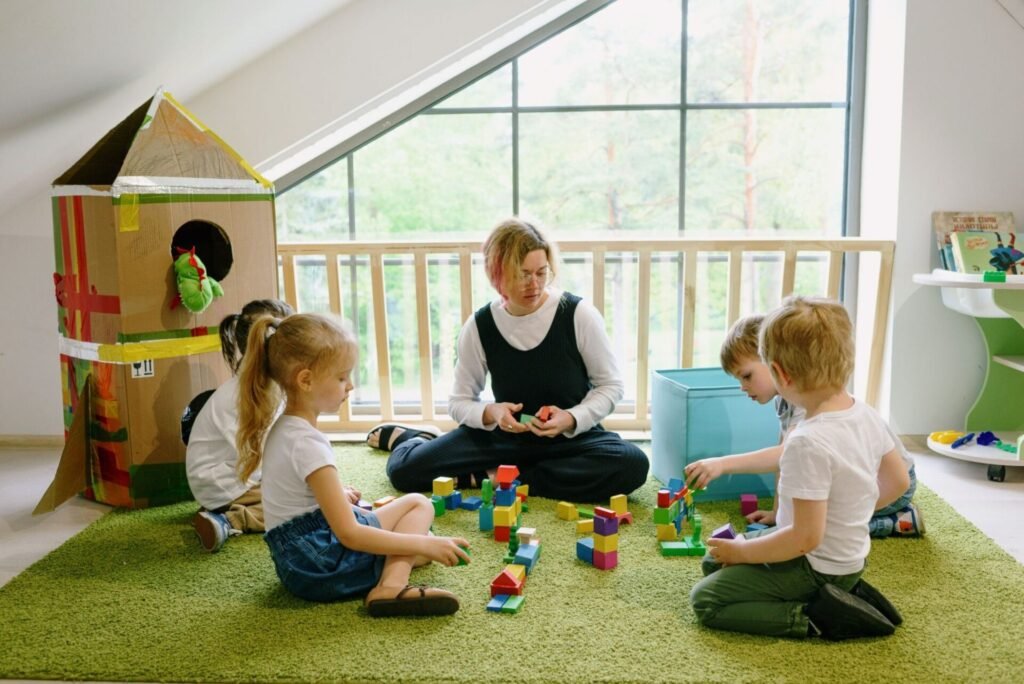
Observe how teachers interact with children during your tour. Do they get down to a child’s eye level? Are they asking questions, reading books, and encouraging play?
Positive teacher-child relationships help children feel secure and confident while supporting healthy emotional development.
3. A Strong Early Learning Program
Children learn best through play, exploration, and hands-on experiences. The best Maryland child care centers balance structured learning with opportunities for creativity and free play.
An effective early childhood program includes activities that build:
- Language skills
- Early math concepts
- Problem-solving abilities
- Fine motor skills
- Gross motor skills
- Creativity
- Social development
If you’d like to learn more about why these early experiences matter, read our blog on The Importance of Early Childhood Education Every Laurel, MD, Parent Should Know.
4. Opportunities for Social Development
Child care isn’t just about academics. It’s also where many children begin developing lifelong social skills.
A quality center encourages children to:
- Share with others
- Take turns
- Solve simple conflicts
- Build friendships
- Express emotions appropriately
- Work together during activities
These daily interactions help children become more confident and prepare them for kindergarten and beyond.
For more information, check out our article on The Importance of Social Skills for Children.
5. Play-Based Learning
Play is one of the most effective ways young children learn.
Rather than sitting at desks all day, children should spend time exploring, building, pretending, creating, and moving.
Play-based learning helps develop:
- Communication
- Creativity
- Critical thinking
- Physical coordination
- Emotional regulation
- Independence
Centers that prioritize hands-on learning often see children become more engaged and excited about discovering new things.
Many of the activities we recommend in Top 10 Activities for Toddlers in Laurel, MD are examples of learning through play.

6. Communication With Parents
Strong communication builds trust between parents and caregivers.
Ask how the center keeps families informed throughout the day.
Many child care centers provide:
- Daily reports
- Photos
- Activity updates
- Meal information
- Nap schedules
- Incident reports when necessary
Regular communication helps parents stay connected and reinforces learning at home.
A good center should also welcome questions and schedule conferences to discuss your child’s progress.
7. Clean, Organized Classrooms
A well-organized classroom creates an environment where children feel comfortable exploring.
Look for spaces that are:
- Bright and welcoming
- Organized by activity
- Free from clutter
- Filled with educational materials
- Appropriate for each age group
Children should have access to books, art supplies, sensory materials, building toys, puzzles, and dramatic play areas.
The environment should invite curiosity while remaining safe and manageable.
8. Daily Routines That Build Independence
Children thrive when they know what to expect.
Consistent routines help children feel secure while encouraging independence.
A balanced daily schedule often includes:
- Arrival activities
- Circle time
- Learning centers
- Outdoor play
- Meals and snacks
- Rest time
- Creative activities
These routines also teach children responsibility as they begin cleaning up after themselves, making choices, and completing age-appropriate tasks.
Our article Fostering Independence in Young Children: A Guide for Parents explores how independence develops both at home and in child care.
9. Outdoor Play and Physical Activity
Movement is essential for healthy development.
Quality child care centers provide regular outdoor play whenever weather permits.
Outdoor activities help children:
- Build strong muscles
- Improve coordination
- Burn energy
- Develop confidence
- Practice teamwork
- Explore nature
Children should also have opportunities for active indoor movement on days when outdoor play isn’t possible.
10. A Warm, Welcoming Environment
Finally, trust your instincts.
When you walk into a child care center, ask yourself:
- Do the children seem happy?
- Are teachers interacting positively?
- Does the environment feel calm and welcoming?
- Would my child feel comfortable here?
Parents often notice the overall atmosphere before anything else. A nurturing environment helps children feel safe, build confidence, and enjoy learning every day.
If you’re just beginning your search, our How to Choose the Right Daycare in Laurel, MD: A Parent’s Guide walks through additional questions to ask during daycare tours.
Questions to Ask During Your Visit
Before making your final decision, consider asking:
- What is your teacher-to-child ratio?
- What does a typical day look like?
- How do you communicate with parents?
- How do you handle behavior concerns?
- What educational activities do children participate in?
- How often do children play outside?
- What safety procedures do you have in place?
- How do you help children transition into your program?
The answers can help you compare different centers and find the best fit for your child.
Choosing the Right Child Care Center
Every family has different priorities, but the best Maryland child care centers share several important qualities: experienced teachers, a safe environment, engaging educational activities, open communication, and a genuine commitment to helping children grow.
At Busy Minds Daycare, we believe children learn best when they feel safe, supported, and excited to explore the world around them. Through play-based learning, caring educators, and a welcoming environment, we help children build the confidence and skills they need for future success.
If you’re looking for a trusted child care center in Laurel, MD, contact Busy Minds Daycare today to schedule a tour, meet our teachers, and discover how we support children from infancy through preschool as they learn, play, and thrive.