Language development is one of the most important parts of early childhood growth. From learning their first words to having conversations with teachers and friends, young children build communication skills every day through interaction and exploration.
A quality daycare provides children with many opportunities to listen, speak, ask questions, and express their thoughts. Through daily routines, play-based activities, and social experiences, children strengthen their vocabulary, confidence, and ability to communicate with others.
For infants, toddlers, and preschoolers, these early language experiences create a strong foundation for future learning.
Why Language Development Matters in Early Childhood
Language skills affect many areas of a child’s development. Strong communication skills help children:
- Express their needs and feelings
- Build relationships with others
- Follow directions
- Solve problems
- Develop confidence
- Prepare for school
Children begin developing language from birth. Every conversation, story, song, and interaction helps their brains make important connections.
This is why early childhood education plays such an important role. To learn more about the impact of early learning experiences, read The Importance of Early Childhood Education Every Laurel, MD, Parent Should Know.
Conversations With Teachers Build Vocabulary
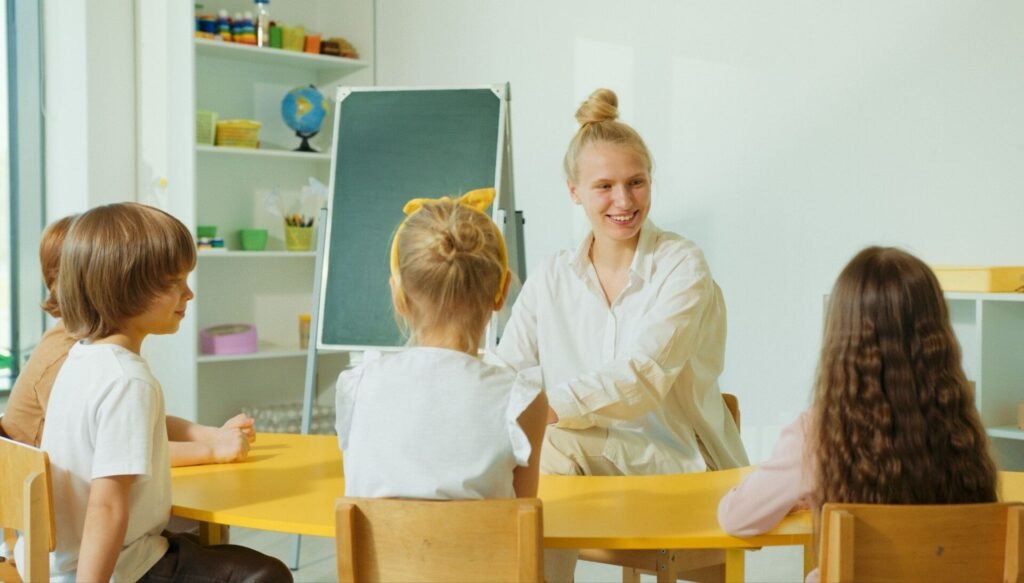
One of the biggest ways daycare supports language development is through daily conversations.
Teachers talk with children throughout the day during activities like:
- Playing together
- Eating meals and snacks
- Getting ready for activities
- Reading books
- Exploring new materials
These conversations introduce children to new words and help them understand how language works.
For example, a teacher may describe colors, shapes, emotions, or actions while children play. Instead of simply saying “ball,” a teacher might say, “You rolled the blue ball across the floor. It moved quickly!”
These small interactions expand vocabulary and encourage children to use more descriptive language.
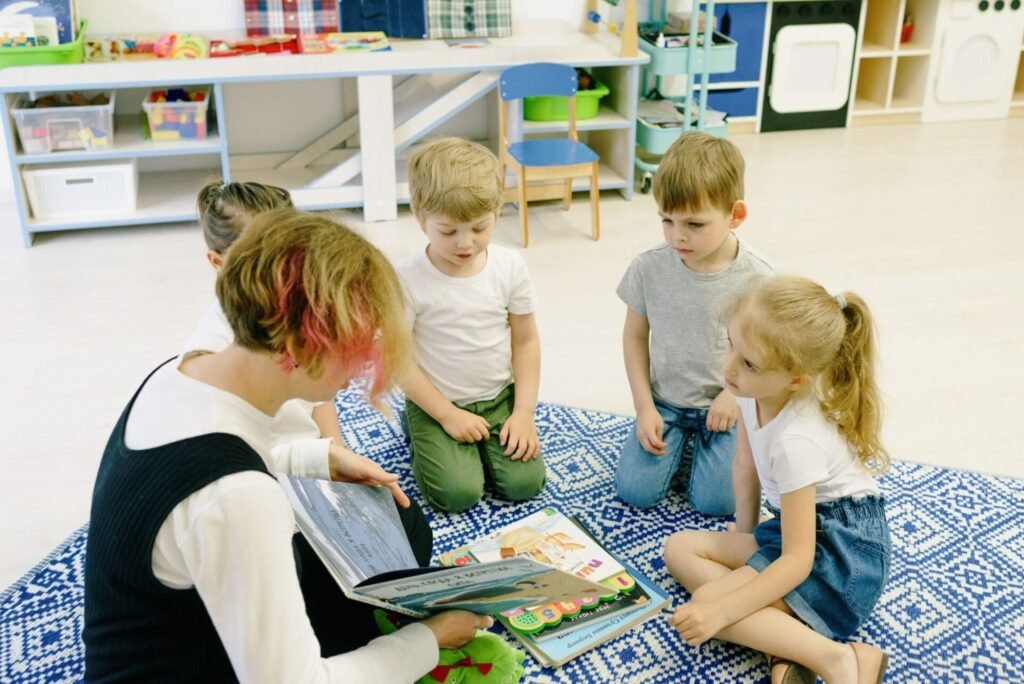
Story Time Encourages Communication Skills
Reading is one of the best ways to support early language development.
During story time, children learn:
- New vocabulary
- Sentence structure
- Listening skills
- Storytelling abilities
- Imagination
Teachers can ask questions such as:
- What do you think happens next?
- How does the character feel?
- What do you see in the picture?
These questions encourage children to think, respond, and share their ideas.
Regular reading also helps children develop early literacy skills that prepare them for kindergarten.
Play-Based Learning Supports Language Growth
Play is a natural way for children to practice communication.
During pretend play, children create stories, take on different roles, and interact with others.
Examples include:
- Playing house
- Pretending to run a restaurant
- Acting like doctors or teachers
- Building with blocks together
These activities encourage children to use their imagination while practicing conversation skills.
Play-based learning helps children learn how to express ideas, listen to others, and communicate during social situations.
Learn more about this approach in our blog Why Is Play-Based Learning Important?
Singing and Music Strengthen Language Skills
Music is another powerful tool for language development.
Songs help children learn:
- New words
- Rhyming patterns
- Rhythm
- Memory skills
- Listening skills
Simple activities like singing the alphabet, learning movement songs, or repeating nursery rhymes help children recognize sounds and patterns in language.
Music also creates opportunities for children to participate even before they can speak in full sentences.
Social Interaction Helps Children Communicate
Daycare gives children daily opportunities to interact with other children.
Through group activities, children learn:
- How to start conversations
- How to listen
- How to take turns speaking
- How to share ideas
- How to solve disagreements
These experiences help children become more comfortable communicating with others.
Social development and language development are closely connected because children learn many communication skills through relationships.
Our article The Importance of Social Skills for Children explains how early friendships support overall development.
Teachers Encourage Questions and Curiosity
Young children are naturally curious. They want to know how things work and why things happen.
A strong daycare environment encourages children to ask questions and explore answers.
Teachers support this by:
- Responding to children’s questions
- Introducing new words
- Encouraging discussions
- Asking open-ended questions
- Celebrating children’s ideas
When children feel comfortable speaking, they become more confident communicators.
Daily Routines Create Learning Opportunities
Everyday routines are filled with language-learning moments.
Activities like:
- Cleaning up toys
- Washing hands
- Choosing activities
- Eating meals
- Getting ready for outdoor play
give children opportunities to hear and practice language.
Teachers can introduce words related to actions, objects, and emotions while helping children understand routines and expectations.
These consistent interactions help children build confidence and independence.
Supporting Language Development at Home
Parents can continue encouraging language growth outside of daycare by:
- Reading together daily
- Asking questions
- Listening carefully
- Encouraging storytelling
- Singing songs together
- Talking about everyday experiences
Simple conversations during meals, car rides, or walks can create valuable learning opportunities.
Language Development at Busy Minds Daycare
At Busy Minds Daycare, we understand that communication skills begin developing long before children enter elementary school. Our classrooms provide children with opportunities to talk, listen, explore, and interact through engaging activities designed for their age and development.
Through reading, play-based learning, music, group activities, and supportive teacher interactions, children build the language skills they need to express themselves and connect with others.
Our programs are designed to support children from infancy through preschool while creating a safe and encouraging environment for growth.
Give Your Child a Strong Start
Language development is a key part of early childhood success. The conversations children have, stories they hear, and experiences they share all contribute to their ability to communicate and learn.
If you are looking for a daycare in Laurel, MD that supports language development through meaningful interactions and engaging activities, contact Busy Minds Daycare today to learn more about our programs and schedule a visit. We would love to help your child learn, grow, and build confidence every day.